COUNTRY:
USA
YEAR:
2025
INDUSTRY:
FINANCE
ROLE:
PRODUCT DESIGN & GRAPHIC DESIGN
2 months
Full Launch

STELRIX
Stelrix replaces FICO-based credit with something fundamentally different: a dynamic credit line backed by a user's investment portfolio. As portfolio value moves, so does available credit.
challenge.
Turn a technically complex financial mechanism into an experience users could understand and rely on, without ever feeling overwhelmed.
Also, the product also targets a luxury audience — investors who expect precision, calm, and control in every touchpoint. Confusion isn't a minor friction for this user, It's a trust failure.
what I did.
Replaced confusion with confidence at the core mechanic.
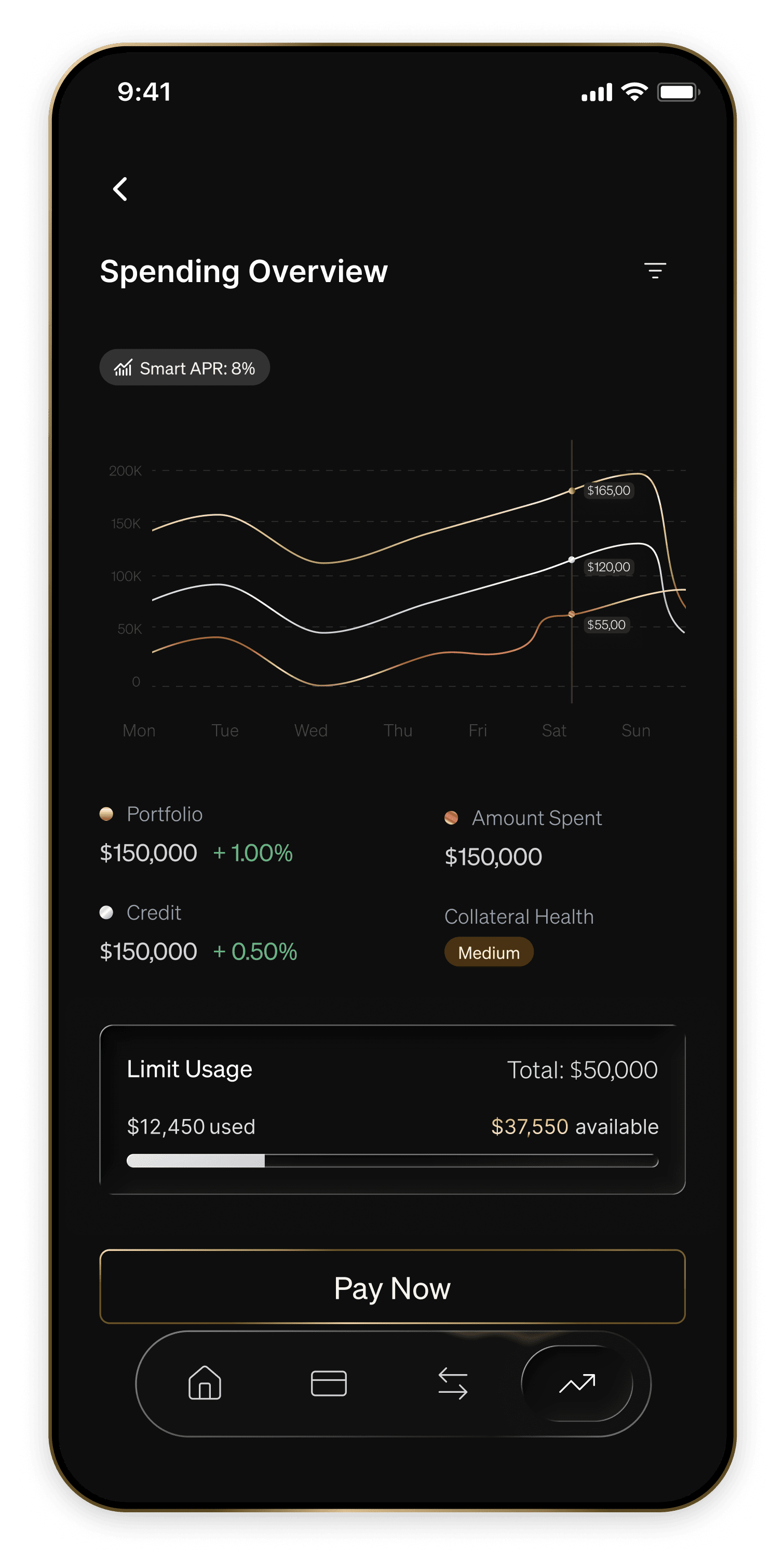
The product's value proposition — your portfolio backs your credit line — was also its biggest comprehension risk. Users who don't grasp that relationship don't trust it. I designed contextual education directly into the critical moments: onboarding, portfolio fluctuations, and credit adjustments. Understanding was built into the flow itself, not added as a tooltip or FAQ. This reduced support dependency and made activation a natural outcome of using the product rather than a hurdle before it.

Preserved retention through decision design.
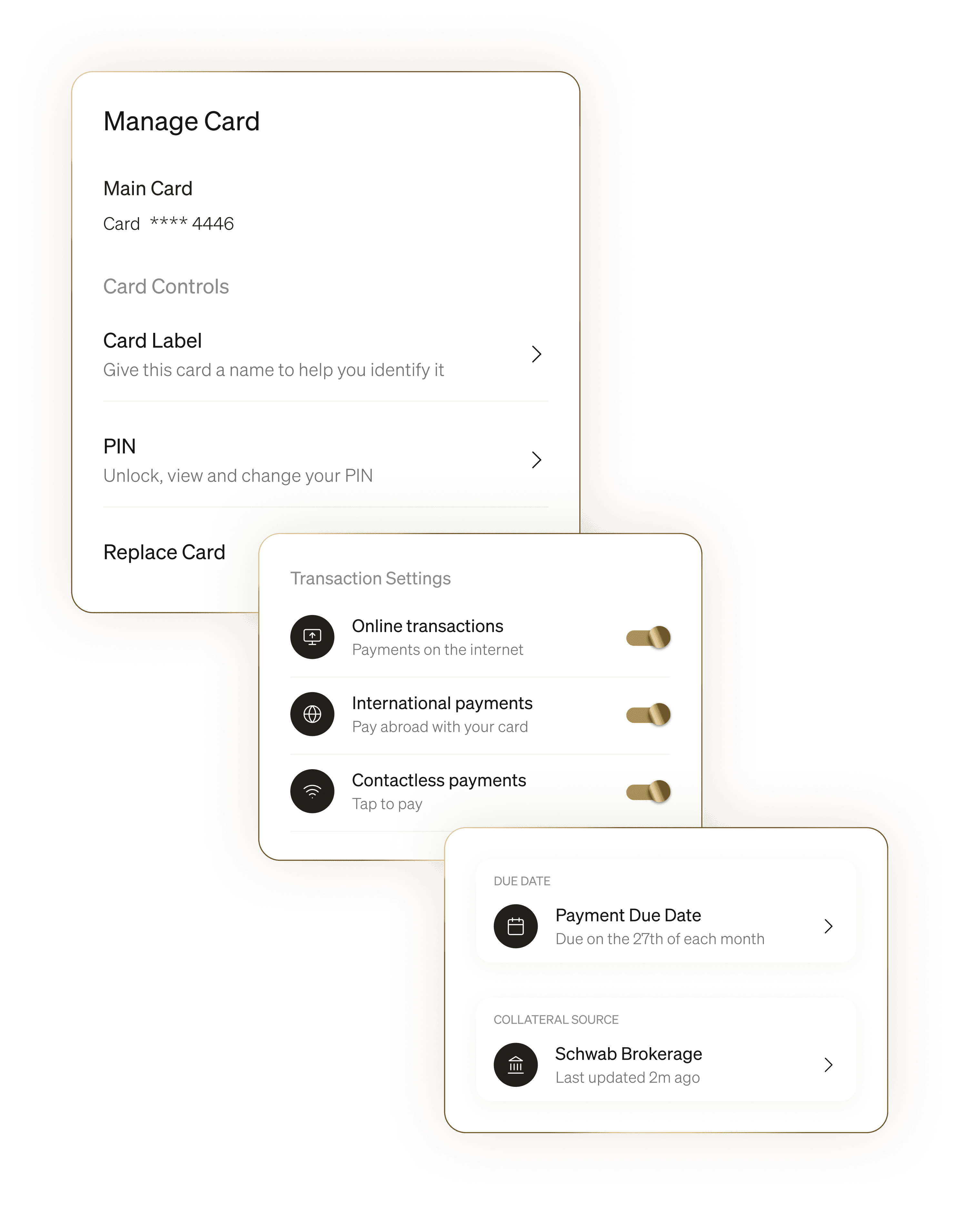
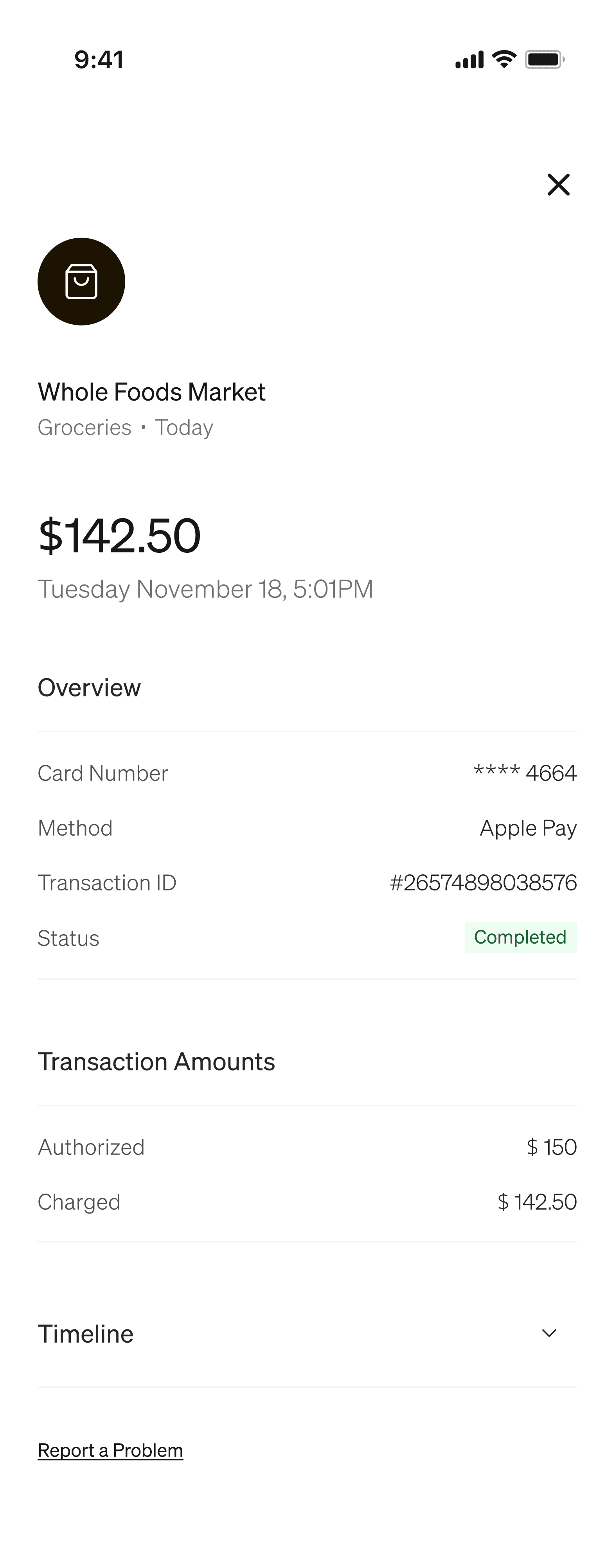
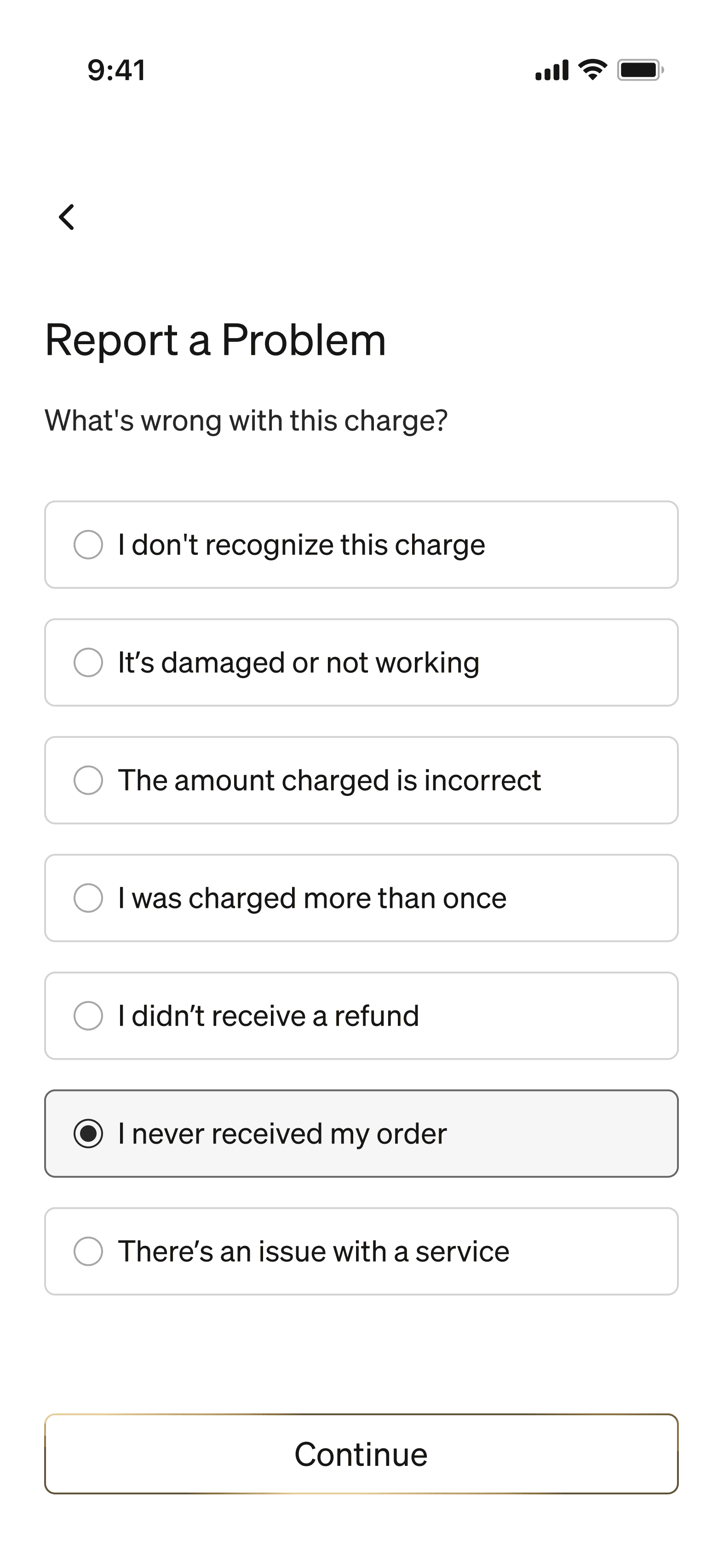
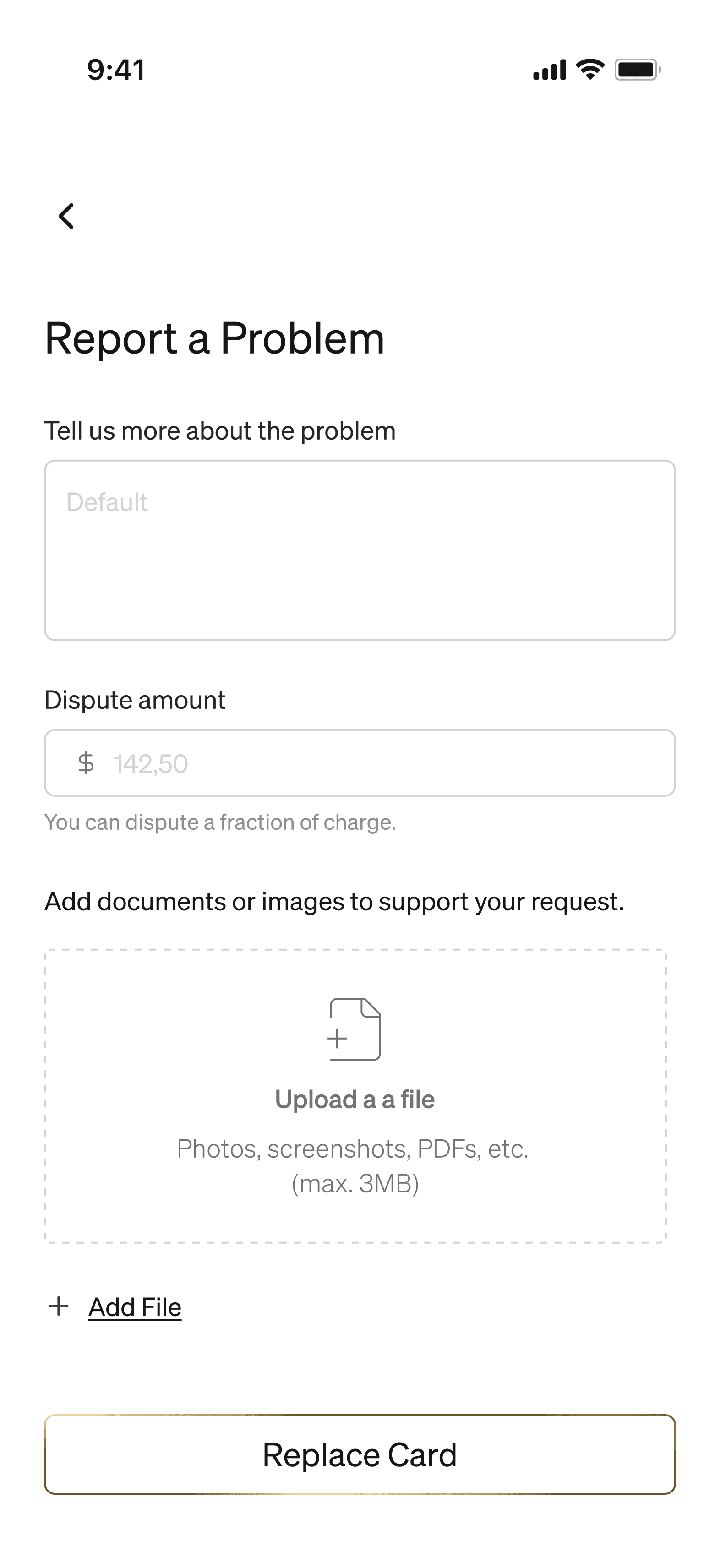
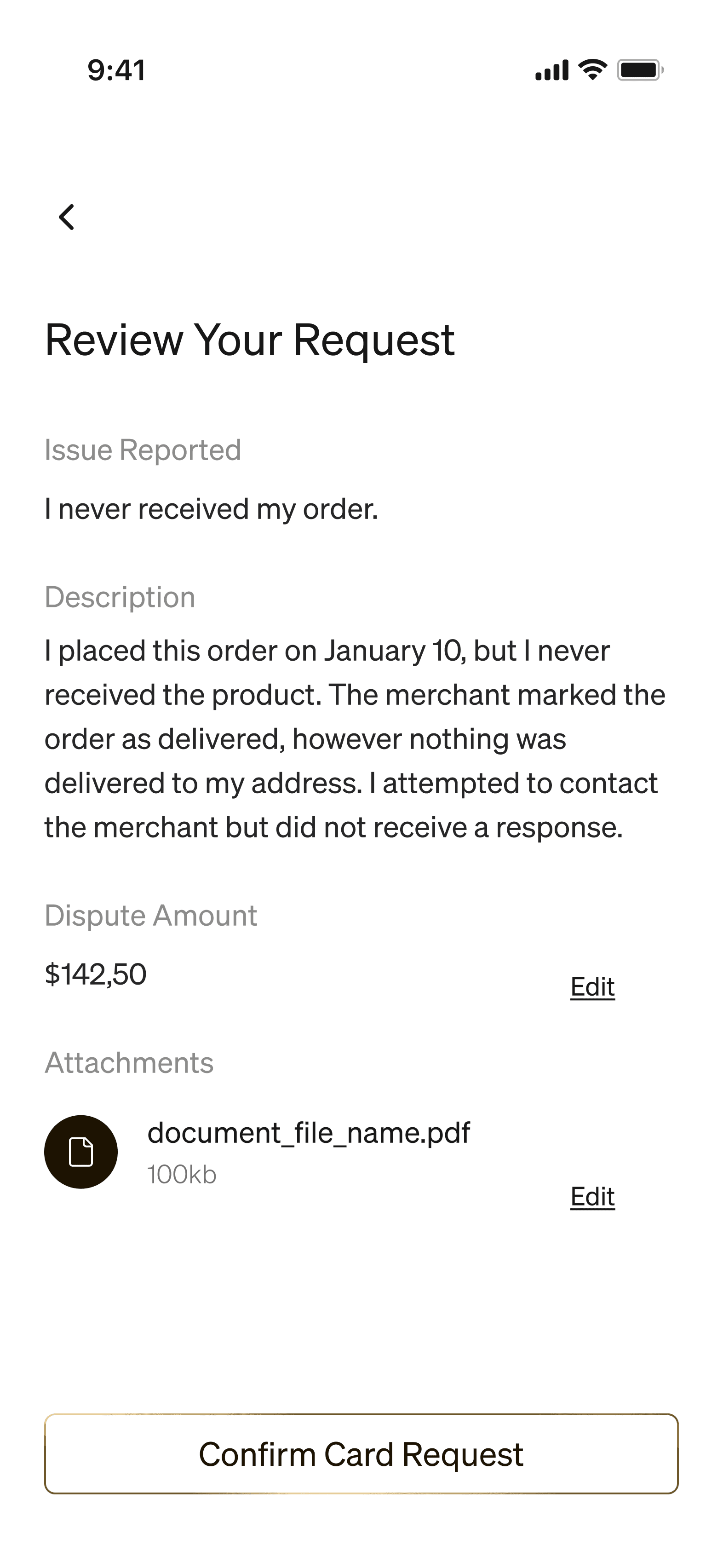
Card management is where users are most likely to make irreversible choices out of confusion. I restructured every flow — freeze, replace, cancel — to surface consequences before confirmation, not after. The result: users who arrived uncertain left with clarity, and accounts that would have been closed stayed active. Good design here was directly tied to revenue.

Made market volatility feel manageable, not threatening.
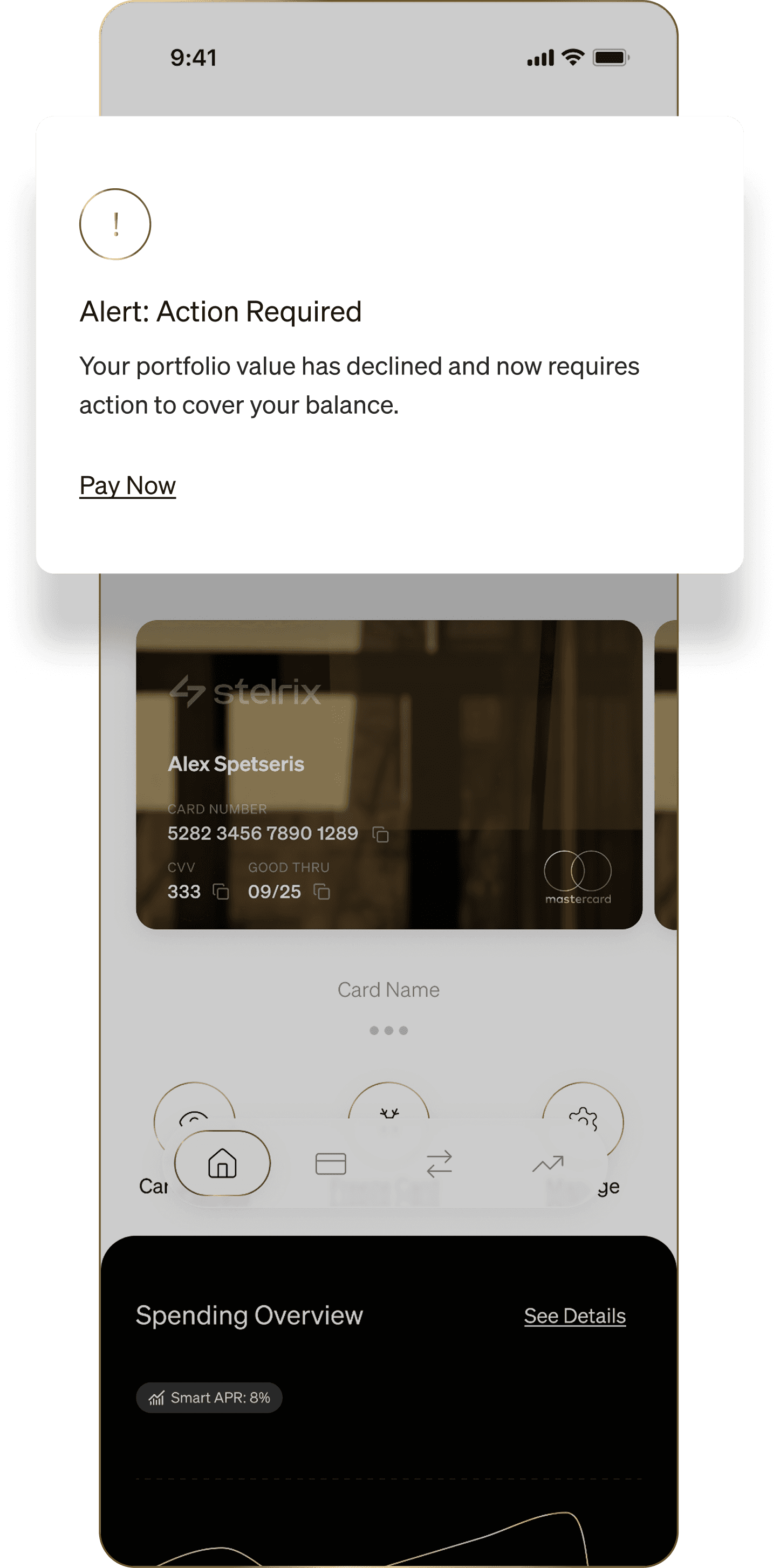
A credit line tied to portfolio performance means that every market dip is also a product experience event. Without deliberate design, that's a churn trigger. I designed a risk communication system that was calm, specific, and actionable — telling users what was happening, why, and what they could do — before anxiety became the dominant feeling. The product didn't just survive volatility. It used those moments to reinforce trust.
Made every system state a trust signal.
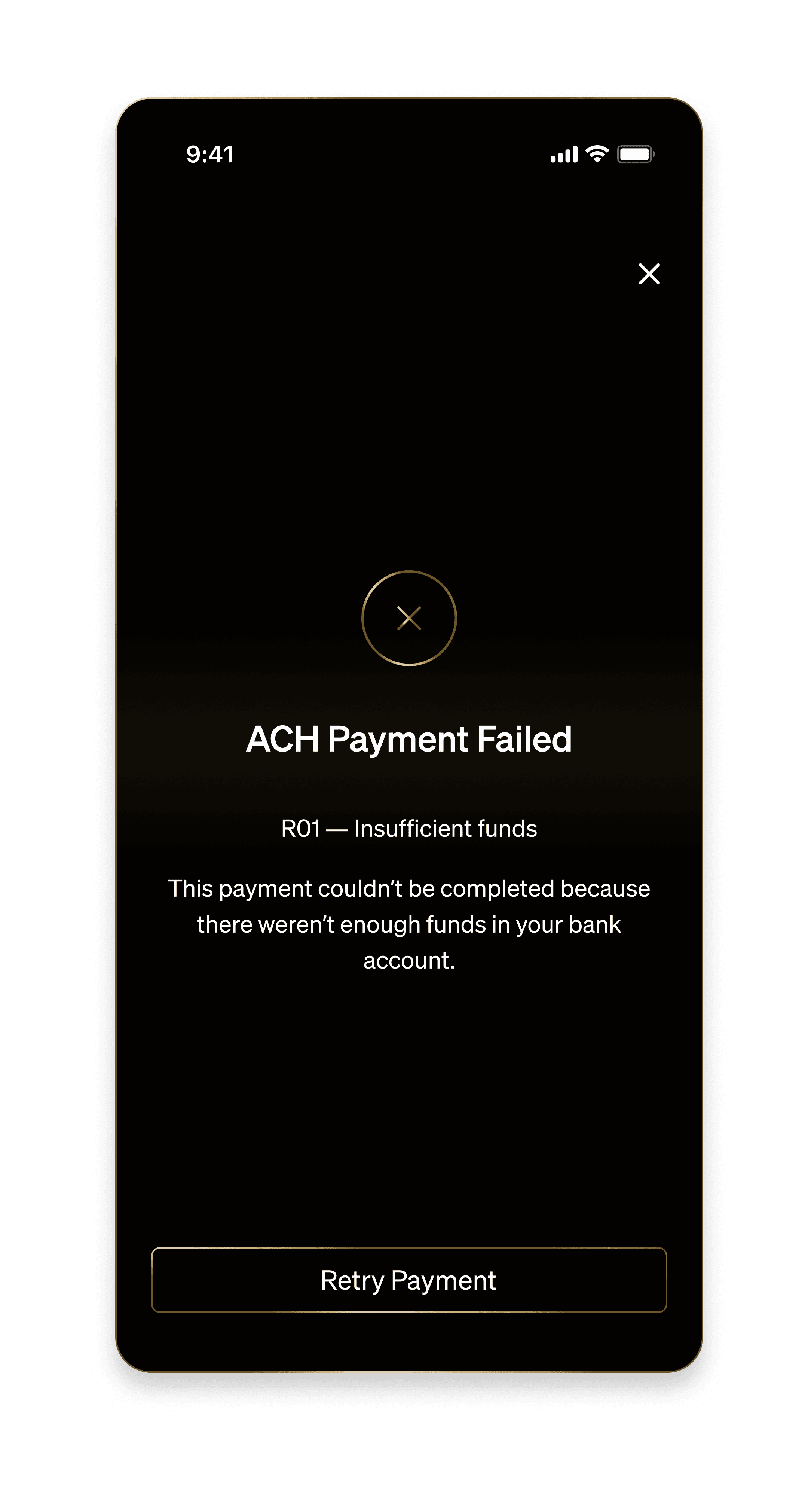
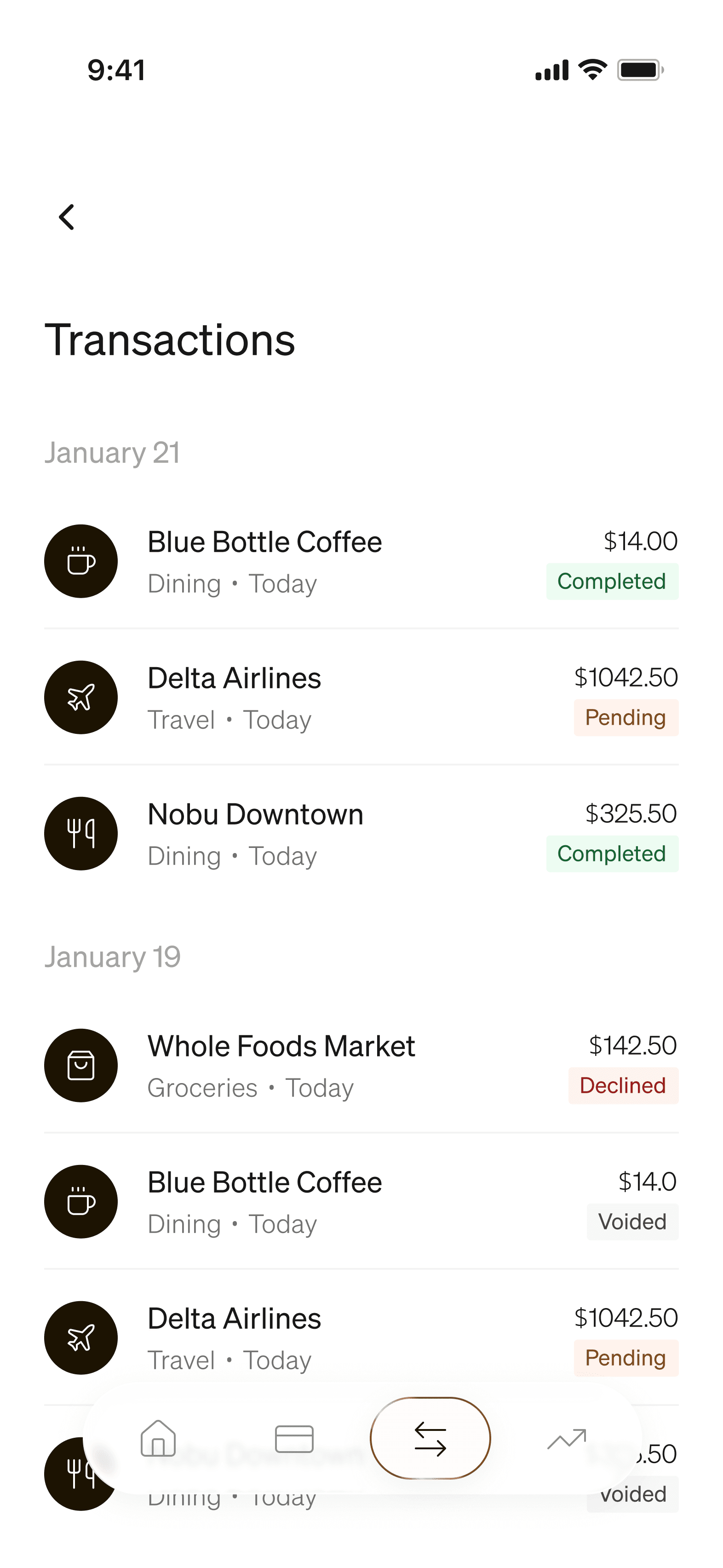
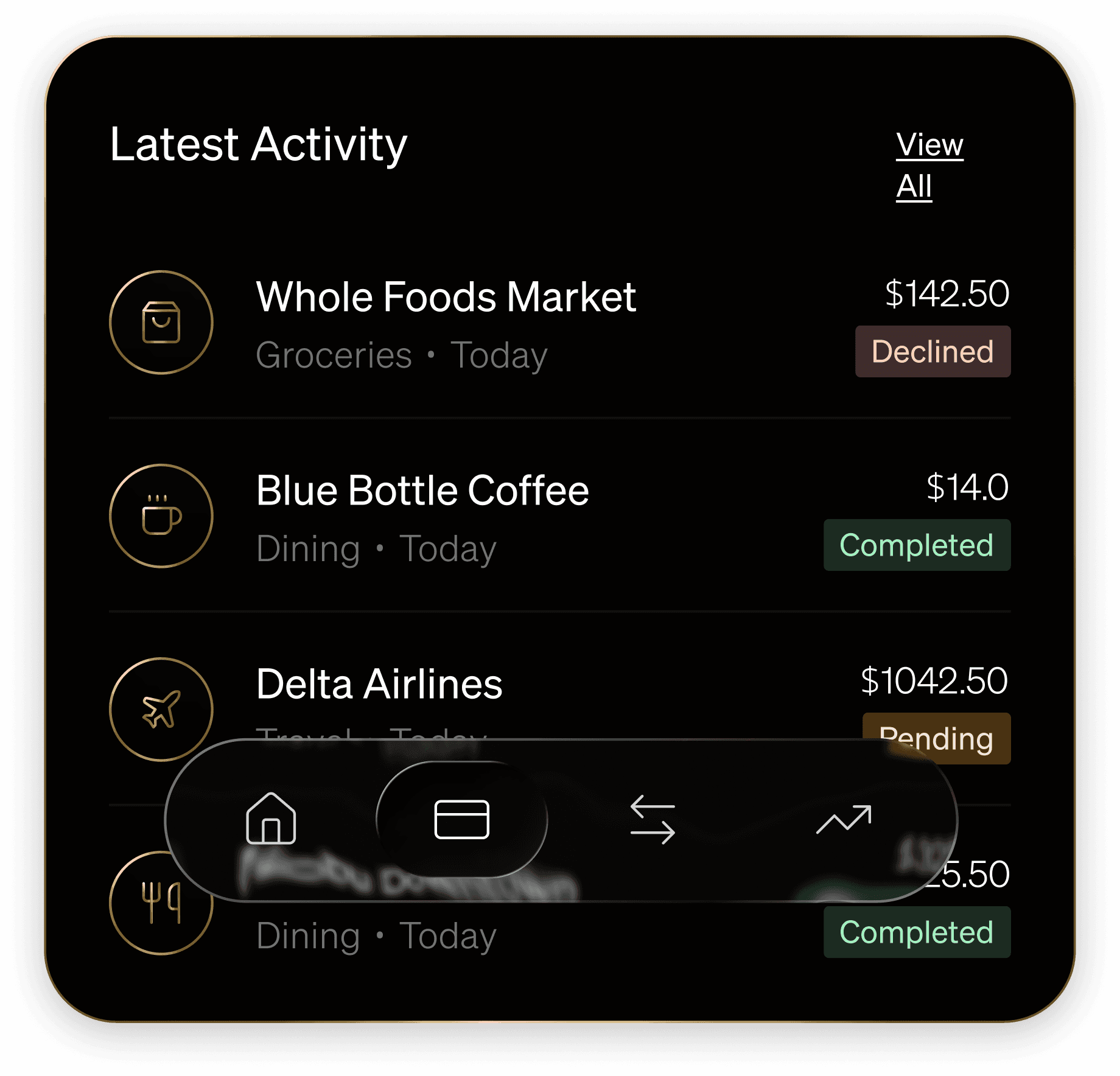
For this audience, a poorly worded error message or an ambiguous payment status isn't an inconvenience — it's a reason to leave. I treated microcopy and system states as core product infrastructure: ACH timelines, credit adjustments, settlement delays — all rewritten in human language with clear progress indicators. Eliminating ambiguity at the edges protected confidence across the entire experience.


the aesthetic standard
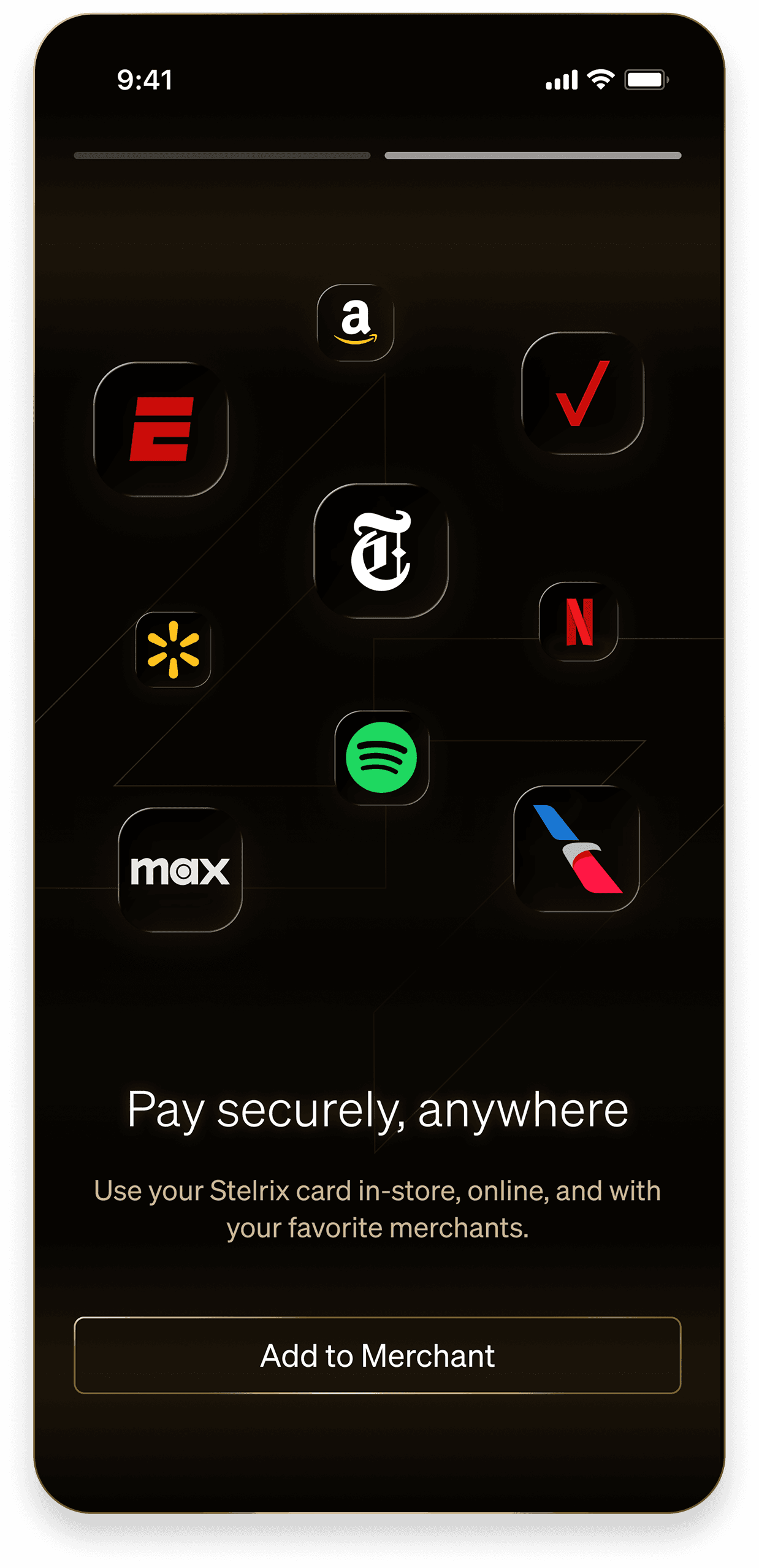
The brief was unambiguous: Apple Card simplicity, Amex confidence, JP Morgan seriousness. The visual language matched that expectation. White as the dominant tone — quiet, editorial, minimal. Gold drawn from the original gold bar concept, used with deliberate restraint to signal exclusivity without performing it. Black introduced with precision to anchor attention in critical moments.
Glassmorphism was referenced from Apple but not reproduced. A hand-crafted implementation made it native to Stelrix rather than borrowed.
the outcome
A product that earns trust at every state — not just when things go right, but especially when they don't. Complex financial dynamics surfaced gradually, through real-time context rather than documentation. An interface that holds the weight of sophisticated data while feeling effortless to use.
The product didn't just need to work. It needed to feel like it belonged in the same category as the financial institutions its users already trusted.
It does.