COUNTRY:
USA
YEAR:
2026
INDUSTRY:
AI / INFRASTRUCTURE
ROLE:
BRANDING, WEBSITE & PRODUCT
ON GOING
CERBREC
context.
Cerbrec is an intelligence orchestration layer for physical infrastructure — data centers, manufacturing plants, energy and supply-chain operations.
Its AI agents connect fragmented sensor and system data into one signal, so operations teams act on problems before they reach the floor.
challenge.
Turn an abstract intelligence platform into something a buyer can grasp in seconds and an operator can trust under pressure, without ever feeling overwhelmed by the data underneath it.
The audience is enterprise operations, from VP of Operations down to field technicians. They measure software by one thing: does it make the next decision clearer? For this user, ambiguity isn't minor friction. It's a reason to keep firefighting the way they always have.
product.
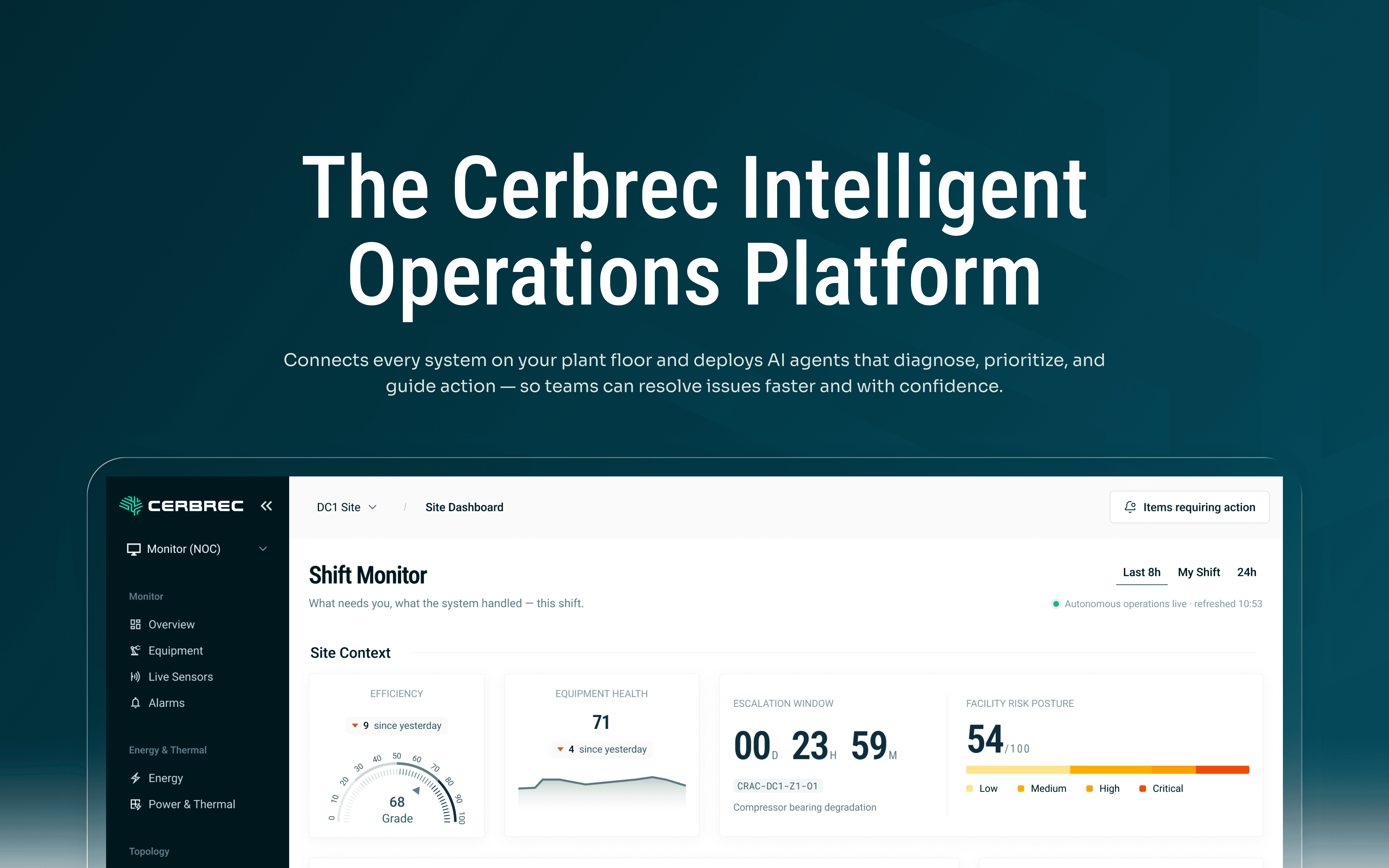
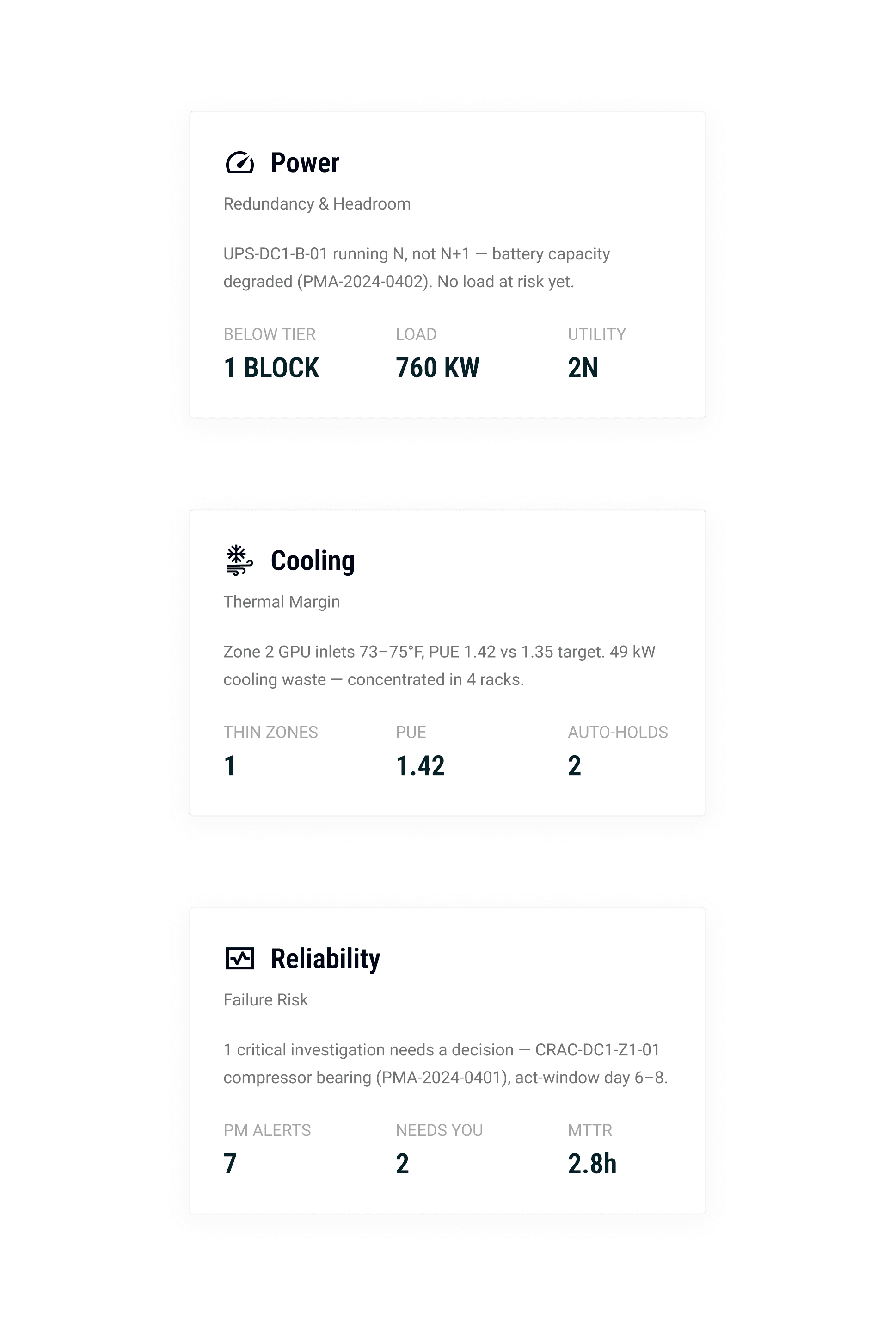
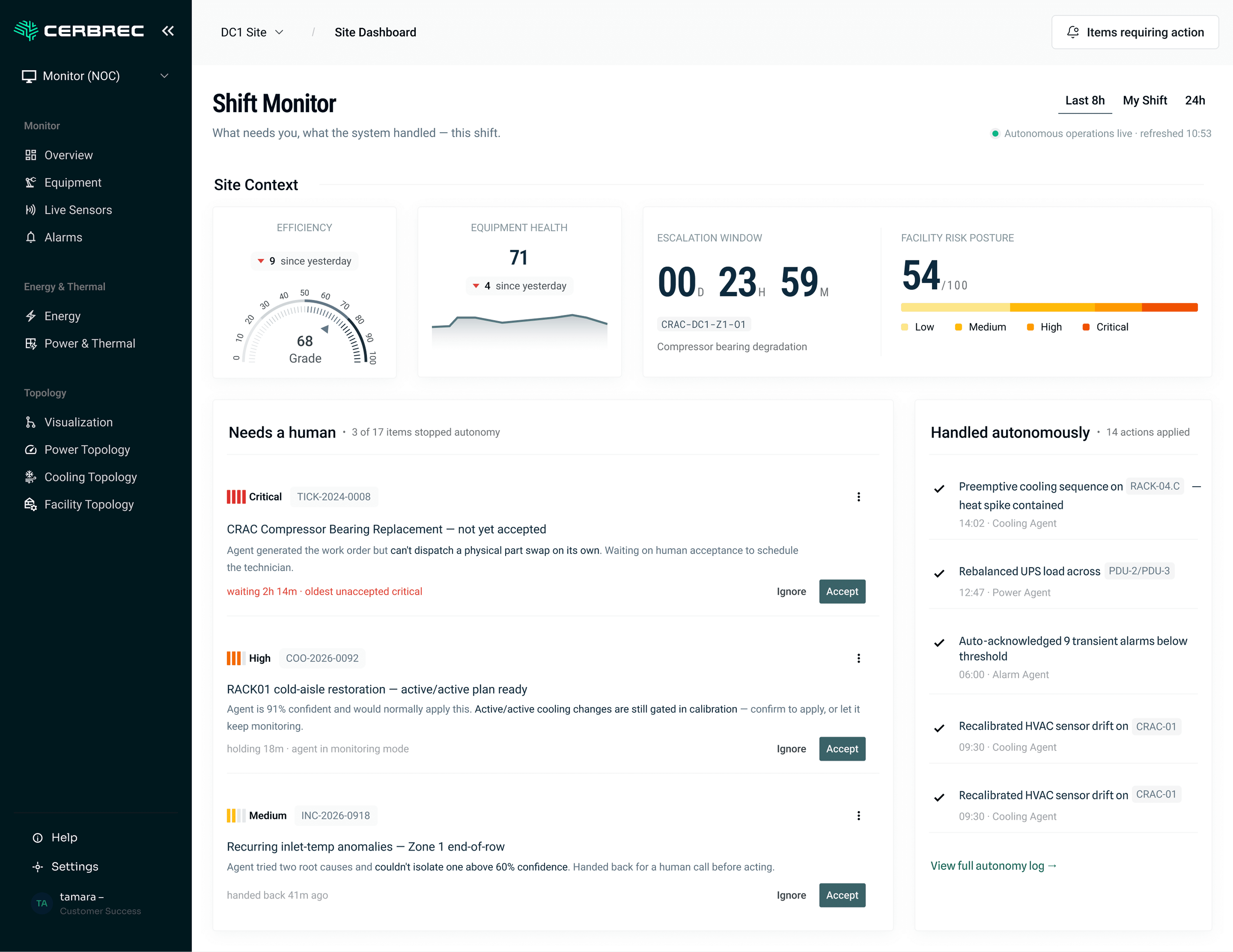
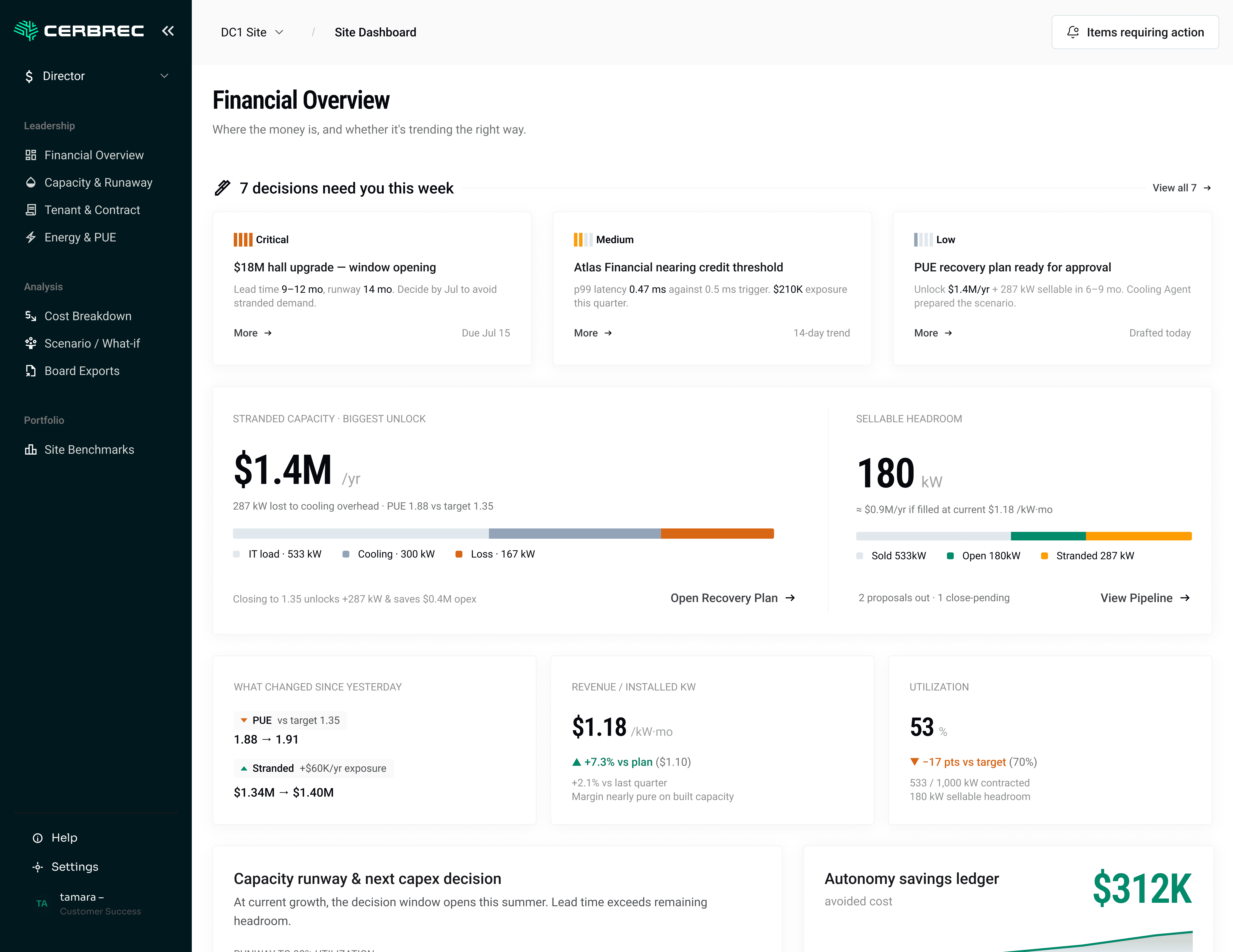
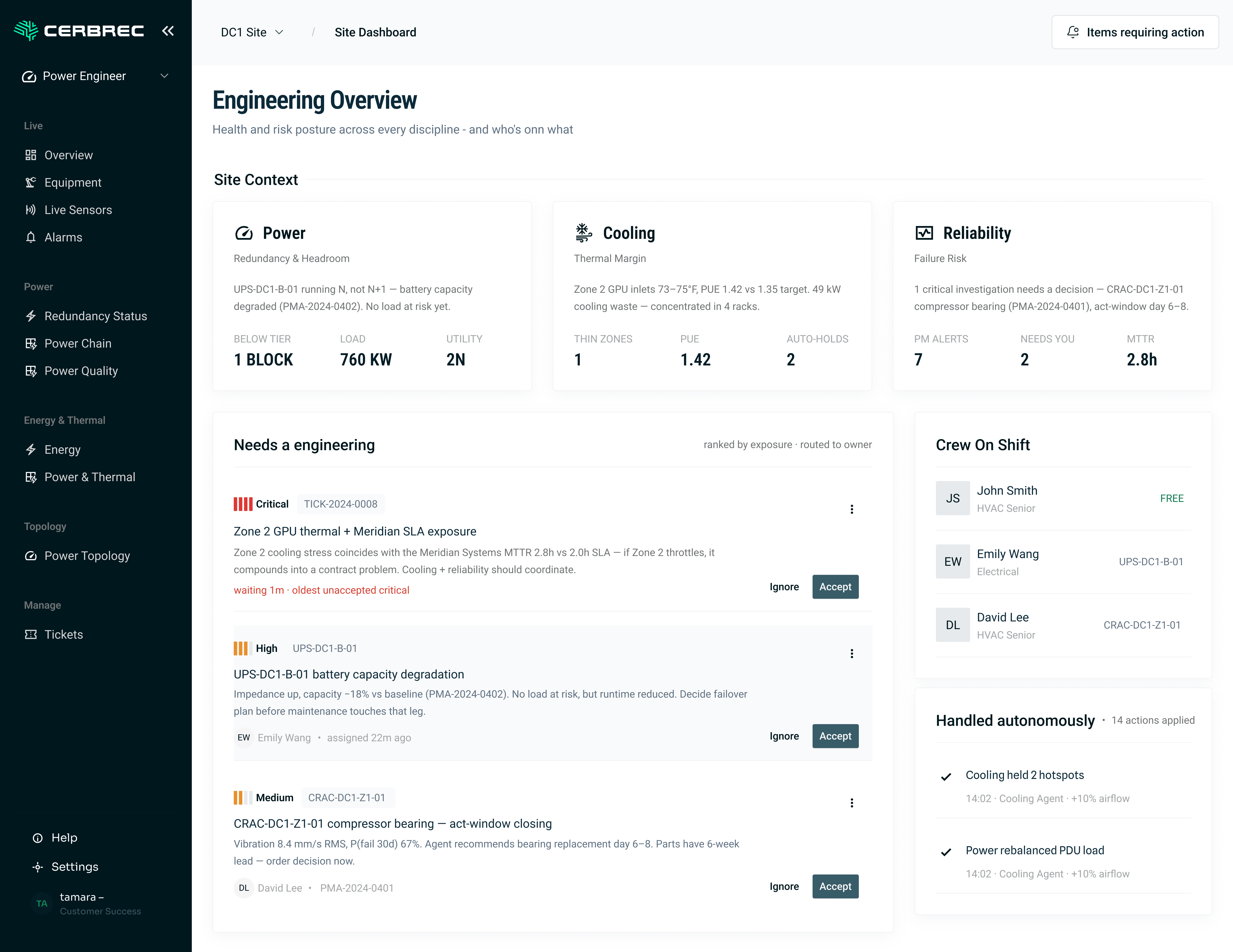
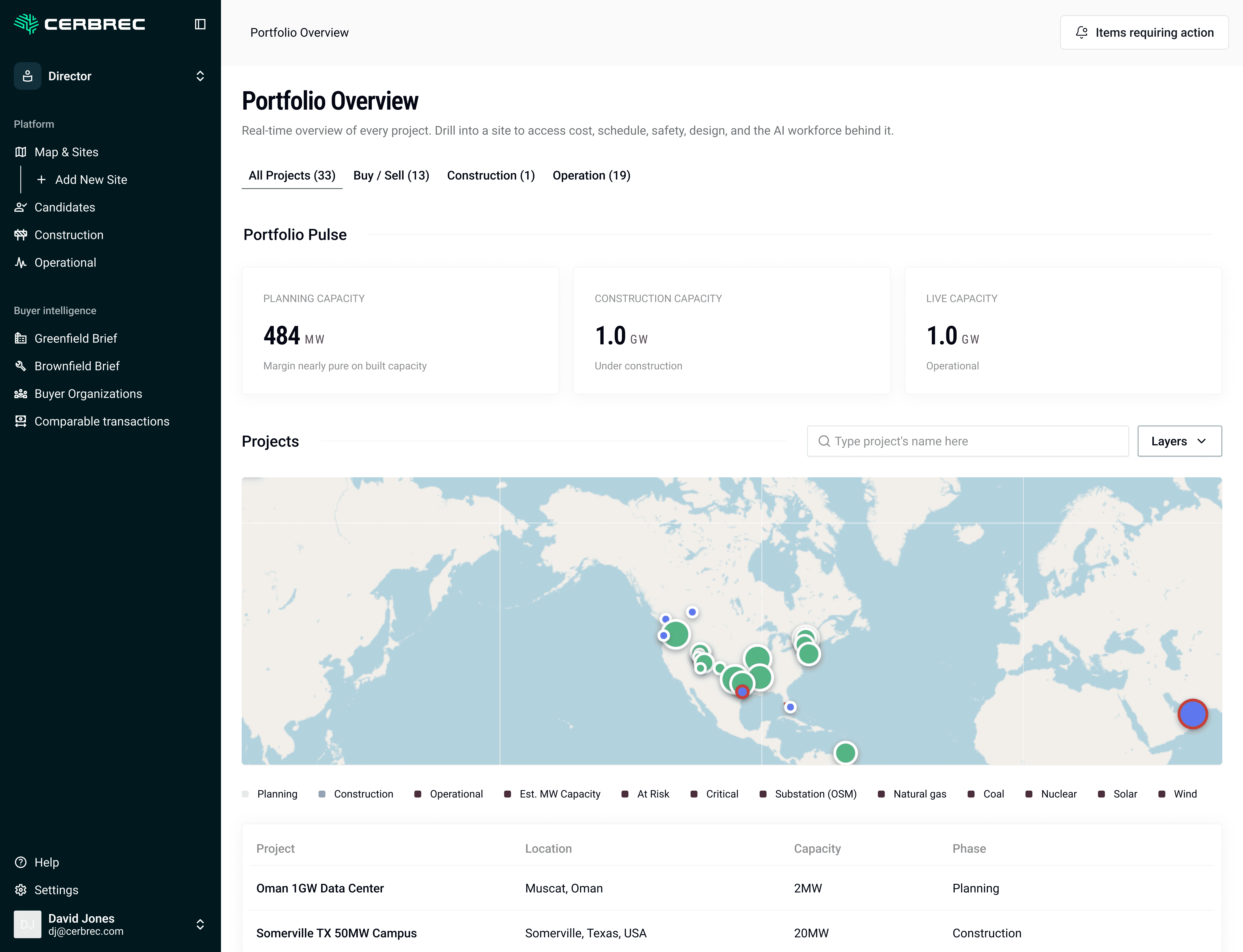
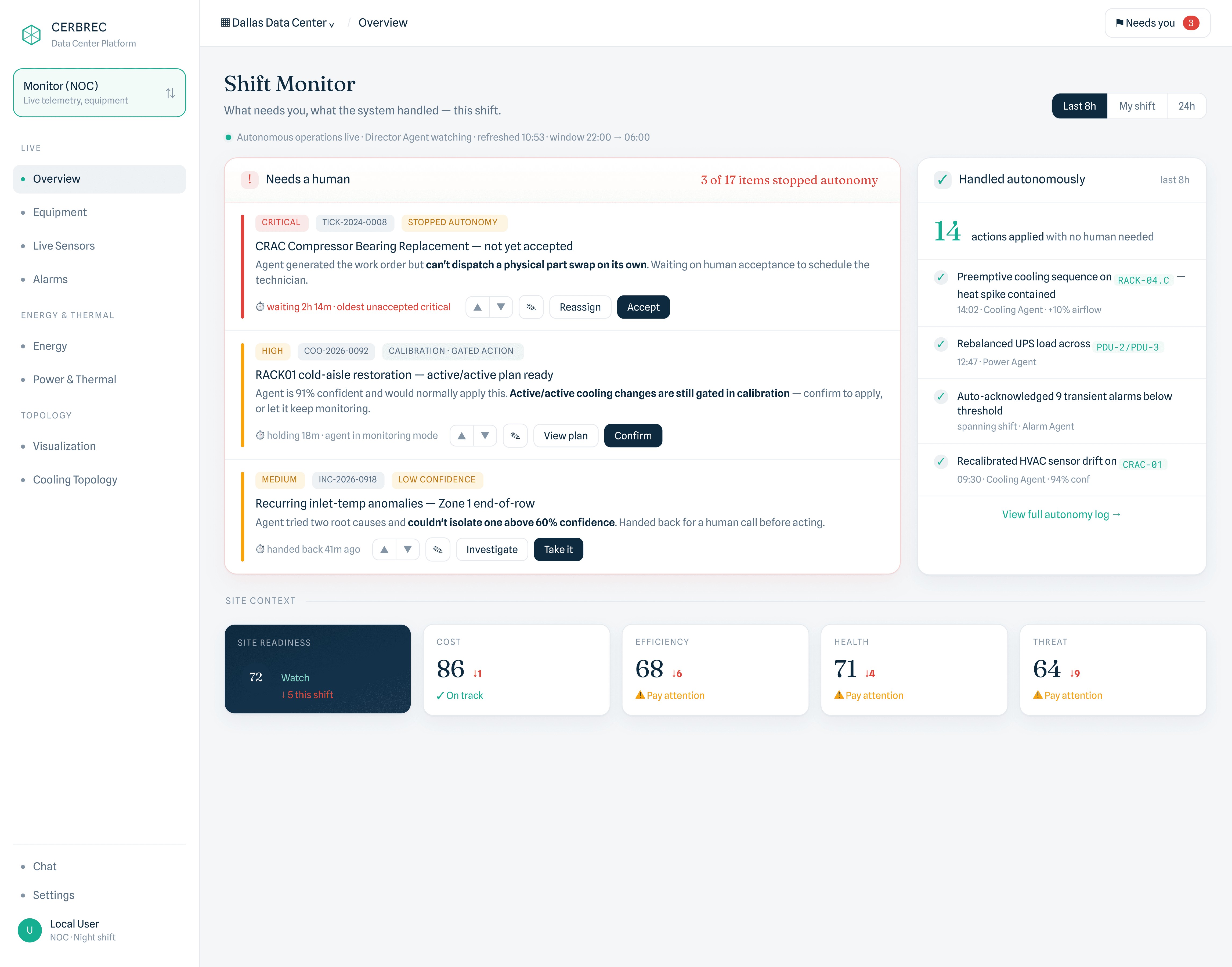
Designed the product around the decision
The core operator held all the operational data but prioritized none of it. Users saw everything at once instead of what to act on first.
I rebuilt each view to lead with the questions an operator actually asks and pushed everything secondary one layer back.
Status, severity, and next step read at a glance, so the interface guides the decision instead of leaving the user to dig for it.
The screens are in active development.
website.
Turned a dense platform into a clear sales story.
I structured the marketing site around the customer's transformation: from reacting to escalations to running operations with clarity.
Each section makes one point and drives one action, so a visitor grasps the value before they scroll. Credibility comes from evidence, not adjectives: named customer results, real deployment outcomes, and partner backing do the convincing.
The site is live in production and gives the team a single, consistent story to send every buyer to.
branding.
Replaced “AI for operations” with a promise people could act on.
The category was crowded with the same vague claim, and Cerbrec's look drifted across decks, the site, and early product screens — inconsistency that reads as risk to an enterprise buyer.
I defined a personality — pragmatic, confident, reliable, forward-thinking — and a single promise beneath it: collapse the time between detecting a problem and resolving it.
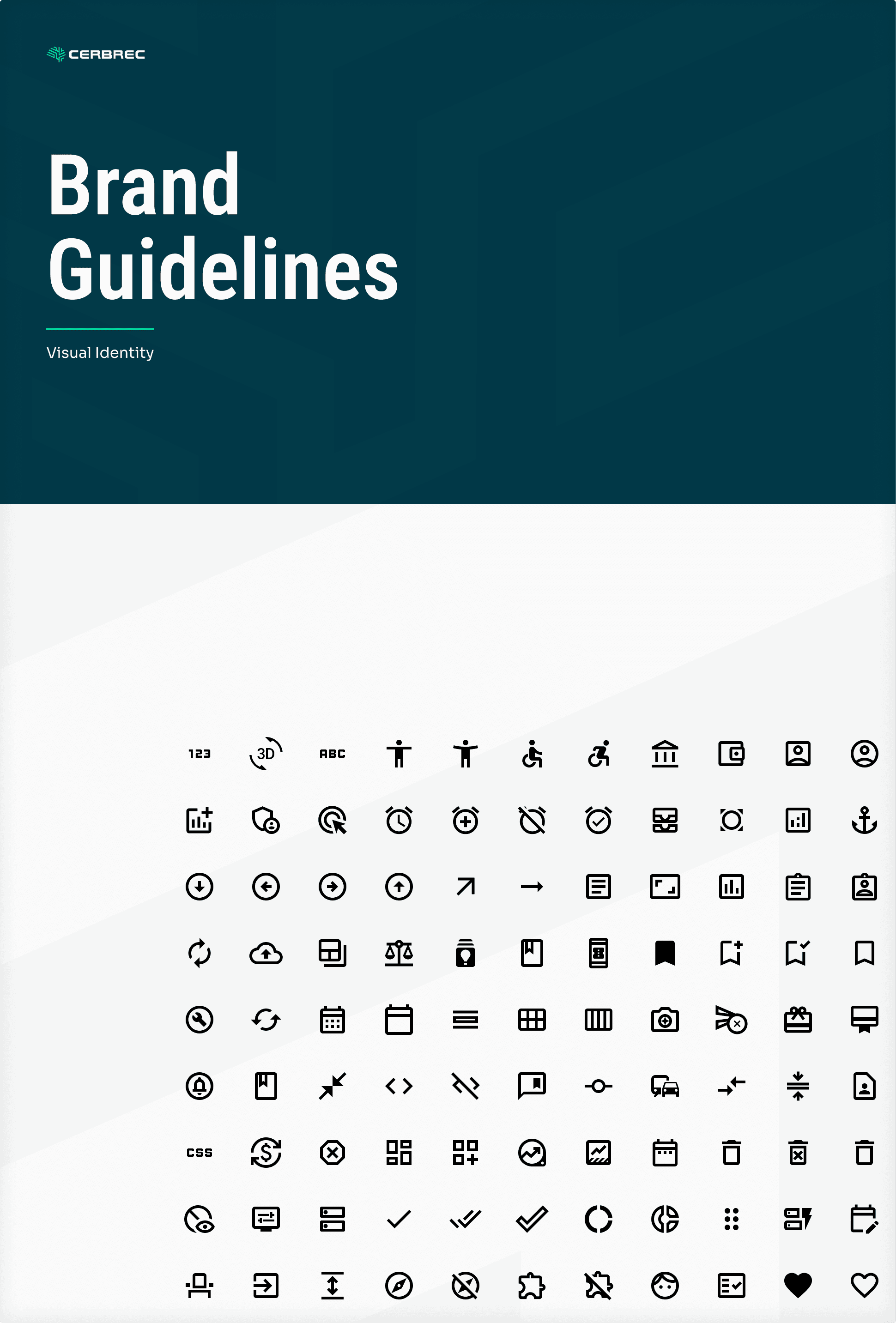
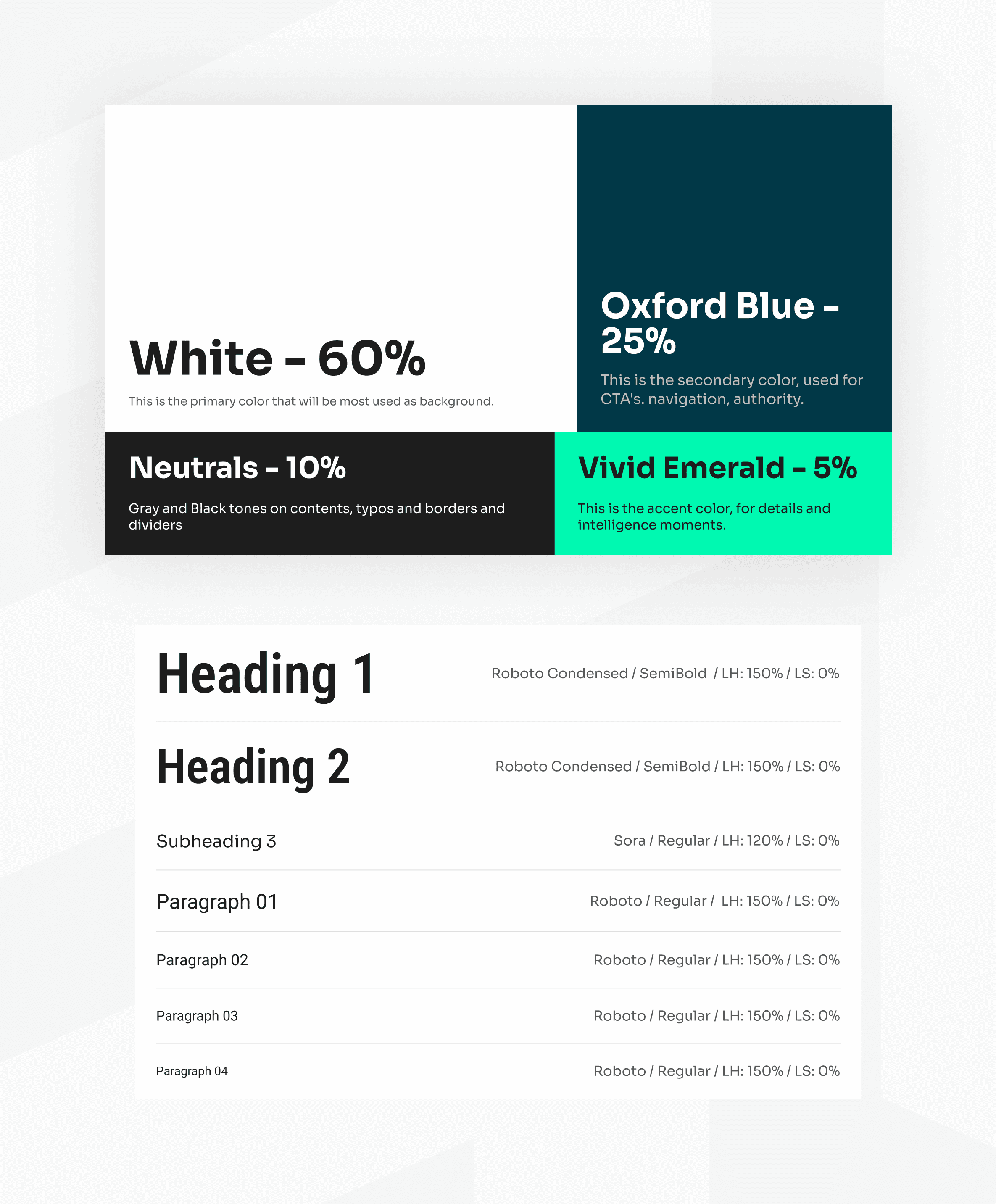
Then I built the system to hold it, with enforceable rules for color, type, and voice. The drift stopped, and the brand started signalling the reliability the product promises.